
Doubling organic conversions for a Series A HealthTech
Series A→B mental-health SaaS (US)
organic conversions in 6 months (475 → 950 a month)
organic traffic (3.8K → 7.7K monthly visits)
2 new pages still among the top traffic drivers
the short version
- The situation: flat conversions, steady traffic, no SEO team.
- The move: bottom-funnel topics picked by buying intent, not search volume.
- The result: conversions and traffic doubled in six months.
- The lesson: SEO amplified existing traction; it did not create it.
The situation
They came to me at Series A. A US HealthTech company selling to mental health professionals: therapists, practice owners, group practices. The product was landing with its core audience, but organic had stalled. Around 475 conversions a month, roughly 3.8K visits, and no growth for months. No SEO team, no structured strategy, and pressure to show a scalable acquisition channel before Series B.
That combination is common. Traffic that looks healthy, conversions that refuse to move, and nobody inside the company whose job it is to fix it.
What I did
Three decisions shaped the whole engagement.
I started from the audience's jobs, not from a keyword list. I mapped the workflows and pain points of therapists and practice owners: what they were actually trying to get done when they searched. The queries came last, not first.
I ignored search volume when picking topics. Volume tells you what's crowded, not what converts. I prioritized themes by how close they sat to a buying decision and how much long-term acquisition potential they held.
I built templates, not one-off pages. Clear formats for high-intent pages and for support-based queries, each tied to product value, so the internal team could keep producing them after I left. The strategy was structured for handover from day one, because the plan was always to hire in-house after Series B.
The deliverables: an opportunity analysis grounded in product positioning and competitor performance, a prioritized roadmap, and briefs for the new bottom-funnel content formats.
What happened
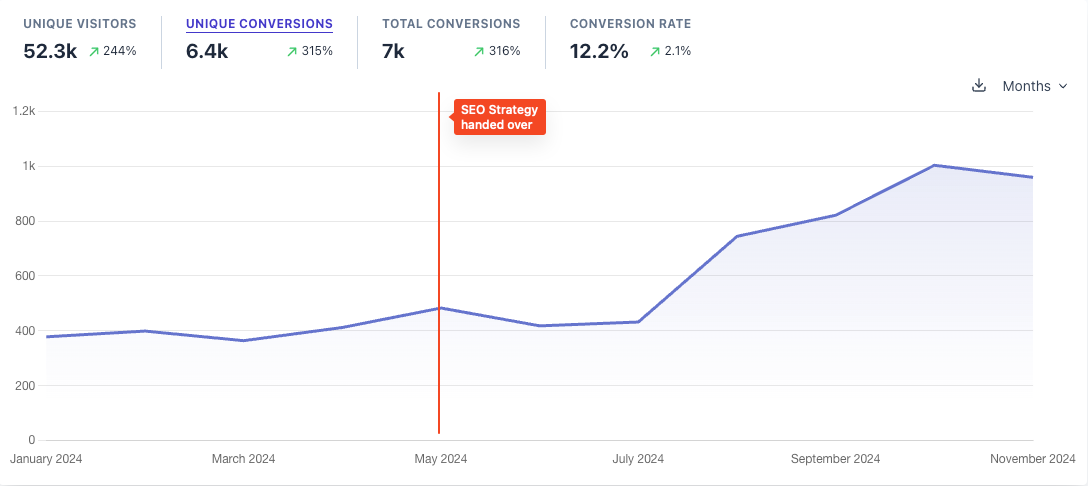
Monthly organic conversions went from about 475 to about 950 in six months. Traffic doubled too, from 3.8K to 7.7K monthly visits, but the conversion line is the one that matters: the growth came from qualified visitors, not just more visitors.
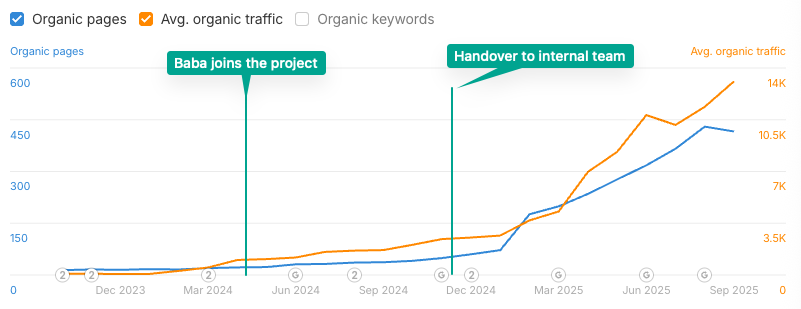
Two of the new pages entered the site's top 5 by traffic and are still there. One ranked among the top 5 pages by conversions. And as the second chart shows, the compounding continued after handover: the internal team kept publishing on the frameworks, and traffic kept climbing.
The durable part: SEO went from a tactical experiment to a core acquisition channel. The results justified hiring a full SEO and content team as part of the Series B expansion, and the frameworks I handed over are what that team still runs on.
What I'd tell you honestly
This worked because the product already had traction. SEO amplified demand that existed. It did not create demand out of nothing. If your product is not landing with its audience yet, this playbook will not save you.
The handover worked because the client committed to hiring. A strategy document nobody executes is shelf-ware. If you cannot commit to internal execution or ongoing support after an engagement, six months of strategy work is the wrong purchase.
What I would do differently: spot the winners earlier. The lift in traffic and conversions was visible in the data before I treated it as a trend. I would have recognized the increase sooner and doubled down on the pages that were working, including competitor pages. A more thorough competitor analysis is now a standard part of my process on every engagement.


I’m Baba, an independent SEO consultant helping B2B companies, SaaS startups, and e-commerce brands turn SEO into a real growth lever. With 14+ years of experience, I work at the intersection of strategy, execution, and commercial impact, focusing on actions that drive revenue, not vanity metrics. I partner with growth-minded teams to solve complex SEO challenges, build internal buy-in, and create strategies that align SEO with business priorities. I also organize the Amsterdam SEO Salon, where practitioners and leaders exchange insights that shape the future of search.
Published 03 July 2026.
WANT RESULTS LIKE THESE?

More stories like this

lower-funnel conversions the month after launch
A 2,011-page relaunch with no dip, and lower-funnel conversions up 21%Mollie, the European payments company. I led SEO in-house.
monthly clicks on one comparison page in 8 months (13 → 290)
The same page type produced leads at three companies, then AI search started retrieving itThree B2B companies: a Dutch fintech lender, a workplace hardware company, and an event-software SaaS

weekly leads through the launch window
Leads went up during migration launch week, not downBedrijfsfitness Nederland, the Dutch corporate fitness provider


